

Choosing and Focusing Your Research Topic
After reviewing your assignment requirements, the next step is selecting a research topic. In some courses, your instructor may provide a list of approved topics. In others, you may be responsible for identifying a topic on your own. Whether you’re preparing a research paper, a presentation, or another type of academic project, this guide is designed to help you generate ideas and narrow your focus to a manageable and meaningful research topic.
Choosing a Topic
Start by identifying topics that genuinely interest you. Selecting a subject you care about will make the assignment more engaging and much easier to complete. Review your course syllabus to see which topics are covered throughout the term and note any that stand out. You can also scan the chapters of your textbook or explore current issues in newspapers, academic journals, magazines, or other reliable information sources to spark ideas.
Once you have a few potential topics in mind, conduct some preliminary research. Look into two or three topics that interest you most and read general articles to understand what questions are being discussed and how scholars approach the subject. Databases such as Gale Academic OneFile and ProQuest Central are good places to begin. As you research, consider whether there is enough credible information available to support your assignment. If your initial search results are limited, you may need to broaden your search or slightly adjust your focus.
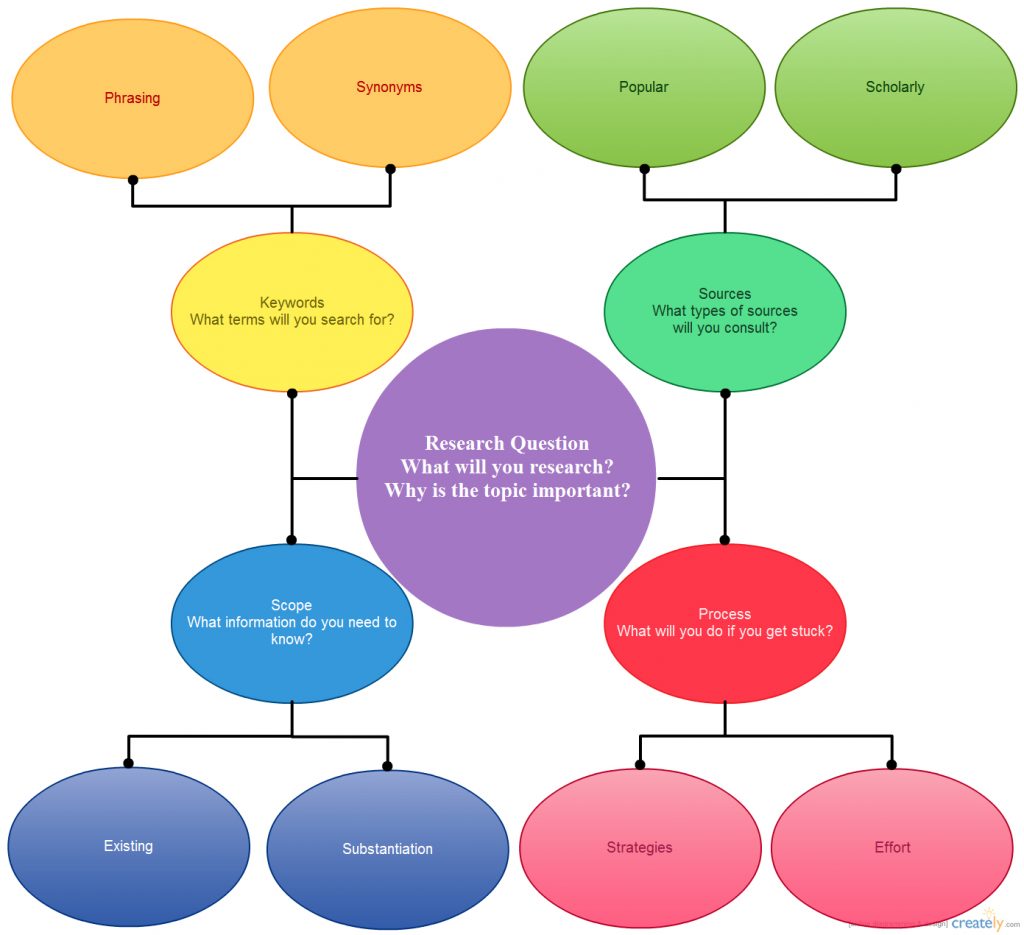
After your initial research, take time to brainstorm. Identify key concepts and ideas connected to your topic by thinking through the who, what, where, when, and why. Write down what you already know, what you think you know, and what you still want to learn. Consider the questions that arise as you explore the topic and note any related subtopics that could help narrow or strengthen your focus. Using a brainstorming map can be especially helpful at this stage.
Developing an effective search strategy early on can save time and reduce frustration later in the research process. A clear plan helps you stay focused and minimizes the risk of reaching a dead end that might force you to change topics midway through your assignment.
Focusing Your Topic
It’s normal for a research topic to evolve as you move through the research process, so stay flexible. As you gather sources, you may find that your topic needs to be narrowed or expanded depending on how much relevant information is available.
If your topic feels too broad, narrowing your focus can make it more manageable. You might limit your research to a specific time period, geographic area, or population, such as a particular age group or urban versus rural communities. Reviewing your early research can also help—look for related or overlapping themes that could help refine your focus. If you’re unsure how to proceed, a librarian can be a valuable resource.
If your topic feels too narrow or you’re struggling to find enough sources, broadening your approach may help. Consider removing or adjusting filters in your database searches, such as expanding the population or geographic scope. Widening the time frame you’re studying can also increase available sources, especially when researching recent issues. Using more general search terms may uncover additional materials—for example, searching for broader concepts rather than highly specific terms. Revisiting related topics from your initial research may also help expand your focus in a meaningful way.
If you get stuck, ask for help from a librarian.
